

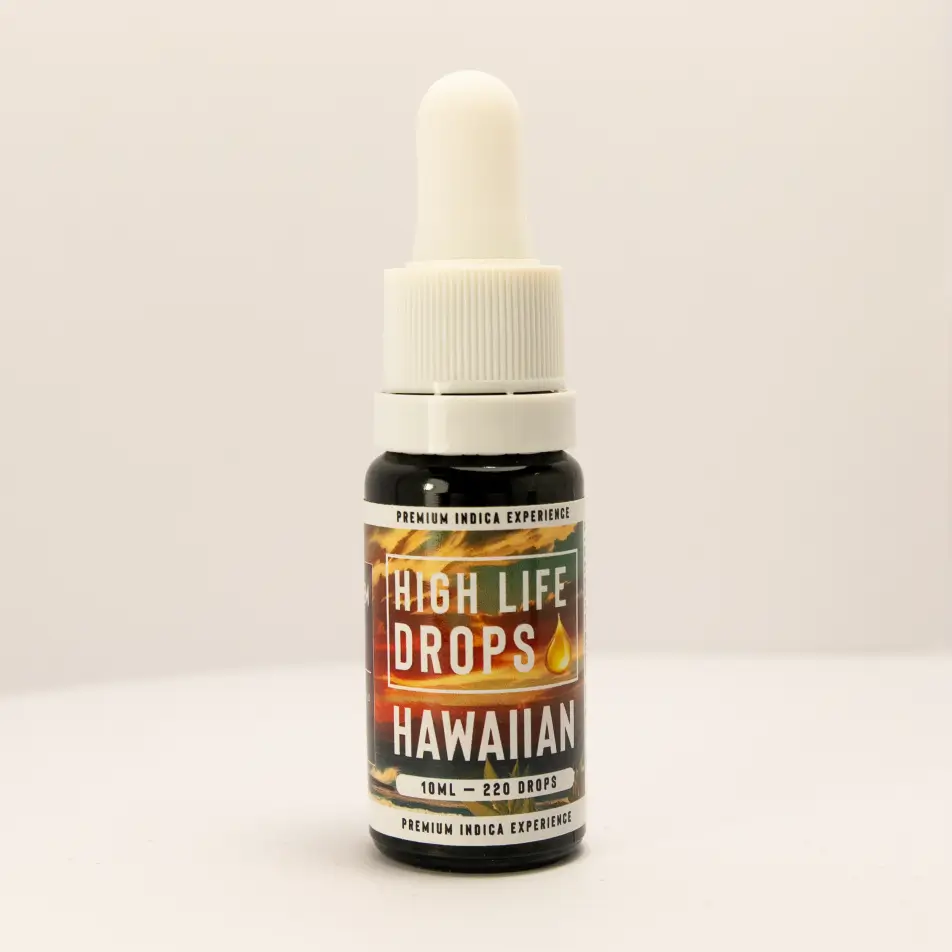


High Life THCNM Drops represent the ultimate evolution in cannabinoid tincture technology, specifically developed to meet the most demanding collectors’ needs for precision, authenticity and molecular complexity. This sophisticated tincture formula is built on traditional botanical extraction where cannabinoids and terpenes are extracted and concentrated through advanced distillation and infusion processes that preserve the full spectrum of active compounds from EU-certified industrial hemp. What really distinguishes this product is its extraordinary precision in dosage, where each individual drop delivers exactly 2.5 milligrams of THCNM together with carefully balanced fruit terpene components that create distinct aroma profiles inspired by classic cannabis strains.
The core of this innovation lies in the understanding of how molecular microdosing can be used to study cannabinoid-terpene interactions on a level of detail that was previously impossible to achieve. With 220 individual doses per bottle, the system offers an unbeatable flexibility for research-interested collectors who wish to investigate how different cannabinoid concentrations affect terpene expression and aroma development. Each drop functions as a microscopic laboratory environment where the THCNM molecule interacts with specifically selected fruit terpenes to create complex aromachemical reactions that can be studied and documented with scientific precision.
The fruit terpene compositions have been developed through extensive analysis of how natural fruit terpenes complement and enhance cannabinoid profiles. The Mango Sativa variant uses the natural occurrence of myrcene in mango to create synergies with THCNM that could theoretically enhance the aromatic expression of the molecule, while the Watermelon Hybrid combines cucurbitacin-derived terpenes with traditional hybrid-cannabinoid profiles to create a unique aromachemical signature that does not occur naturally in any known cannabis strain. This approach to fruit-terpene-engineering represents a fascinating cross between traditional cannabis terpene chemistry and modern fruit aroma research.
Technical Specifications and Microdosing Information
Delivery system: Precision-calibrated dropper with micro-dosing capability
Total Volume: 10ml pharmaceutical-grade cannabinoid tincture
Total Cannabinoid content: 550mg THCNM-dominated molecular complex
Microdosing per Drop: 2.5mg THCNM with complementary fruit terpenes
Total Number Doses: 220 individual microdoses per bottle
Tincture-Bas: Optimal carrier oil for cannabinoid stability and terpene preservation
THC-Status: 0.00% detectable THC from EU-certified industrial hemp
Fruit terpene variation: Mango Sativa, Pineapple Sativa, Strawberry Hybrid, Watermelon Hybrid
Production standard: EU GMP-certified manufacturing with batch-traceability
Quality classification: Premium collectible item for aromatherapy-research over 18 years
Storage recommendation: Cool, dark and dry, inaccessible to children
Research interval for Aromatherapy-Microdosing
Light Research Interval (1-2 drops): 2.5-5mg THCNM equivalent for basic fruit terpene-cannabinoid interaction studies. This range enables subtle aroma profile investigations where research-interested collectors can study how minimal cannabinoid exposure affects terpene volatility and aroma development over time. This level is optimal for long-term stability studies and molecular behavior analysis during controlled conditions.
Medium Research Interval (3-5 drops): 7.5-12.5mg THCNM equivalent for enhanced fruit terpene complexity and deeper cannabinoid aroma synergy studies. This dose range offers a balanced environment to investigate how elevated cannabinoid concentrations affect the chemical expression of fruit terpenes and enables studies of dose-response relationships within aromachemical research.
Fruit Terpene-Cannabinoid Complexes for Aromaresearch
Mango Sativa Terpene Complex: This composition utilizes the mango’s naturally high myrcene content to create synergies with the THCNM molecule that theoretically can enhance the cannabinoid’s aromatic bioavailability. Myrcene functions as a natural terpene enhancer that can facilitate terpene penetration and aroma diffusion, which makes this variant particularly interesting for collectors that study how fruit terpenes can optimize cannabinoid expression. Mango’s tropical terpene components also include significant amounts of limonene and linalool that complement THCNM’s molecular structure for an authentic sativa-inspired aroma profile.
Pineapple Sativa Terpene Complex: Pineapple’s characteristic bromelain-associated terpenes have been combined with traditional sativa terpene components to create a unique hybrid between fruit aroma chemistry and cannabis terpenology. This composition focuses on alpha-pinene and beta-pinene from pineapple together with energizing sativa-terpenes that limonene and terpinolene. The result is a complex aroma profile that demonstrates how tropical fruit terpenes can be integrated with classic cannabis terpenology to create completely new aromatic signatures.
Strawberry Hybrid Terpene Complex: The strawberry’s natural ester terpenes have been combined with balanced hybrid cannabinoid terpenes to create a sophisticated aroma profile that represents modern fruit-cannabis-terpene engineering. This composition includes strawberry-specific terpenes that ethyl butyrate and methyl anthranilate together with hybrid-cannabinoid terpenes that myrcene and limonene. This combination offers research-interested collectors the opportunity to study how berry terpenes interact with cannabinoid molecules to create enhanced aromachemical reactions.
Watermelon Hybrid Terpene Complex: Watermelon’s cucurbitacin-derived terpene components have been integrated with hybrid-cannabinoid profiles to create the most innovative fruit-cannabis-terpene composition in the High Life collection. This combination utilizes watermelon’s unique citrulline-associated terpenes together with balanced hybrid cannabinoid components to demonstrate how the melon family can contribute distinct aromachemical elements that do not occur in traditional cannabis terpenology. This composition represents cutting-edge research within cross-botanical terpene synergy.
Frequently Asked Questions for Microdosing Researchers
Why is 2.5mg per drop optimal for cannabinoid microdosing research?
This level of precision enables extremely detailed dose-tittering where research-interested collectors can study cannabinoid-response curves with unprecedented precision. 2.5mg represents an optimal balance between measurable cannabinoid concentration and flexibility for gradual dose increase, which allows systematic studies of how cannabinoid levels affect terpene expression and aroma development. This microdosing capability is particularly valuable for long-term stability studies where small variations in cannabinoid concentration can have significant effects on the product’s aromatic development over time.
How does fruit terpene integration differ from traditional cannabis terpenes for research purposes?
Fruit terpene integration represents a revolutionary approach where aromachemical components from tropical fruits are combined with cannabinoid molecules to create aroma profiles that never occur naturally in cannabis. This opens up fascinating research areas where collectors can study cross-botanical terpene synergies and how different plant families can contribute with complementary aromachemical elements. The fruit terpenes often add ester-based aroma molecules that create completely other chemical interactions with cannabinoids compared to traditional monoterpenes and sesquiterpenes from cannabis.
What makes the tincture format particularly suitable for precision aromatherapy studies?
The tincture format offers several unique advantages for aroma research, including exceptional stability over time, homogeneous cannabinoid distribution and the possibility of precise volume control that is impossible to achieve with other delivery formats. The liquid nature also allows detailed observations of how cannabinoids and terpenes interact over time, including studies of molecular separation, oxidation and aroma development during different storage conditions. For academically interested collectors, the tincture format offers optimal control over experimental variables and the possibility of reproducible research results.
How is the authenticity and molecular integrity of the fruit terpenes ensured?
All fruit terpenes are extracted from actual fruit sources through advanced steam-distillation and molecular-separation techniques that preserve the complete terpene component from the original fruit without the use of synthetic flavors or artificial flavoring. This ensures that Mango Sativa really contains authentic mango terpenes with all their natural molecular complexities, which is critical for research studies that rely on genuine fruit-cannabis-terpene interactions. Each batch undergoes extensive gas chromatography analysis to verify terpene authenticity and molecular profile integrity according to pharmaceutical-grade standards.